RxProsGLP-1 Program
Tolerability · GLP-1 program review 2026

Almost nobody quits a GLP-1 because it stopped working.

The RxPros clinical team Reviewed by the RxPros clinical team7 min read

They quit around week two, or right after the first dose increase, for a reason that has nothing to do with willpower and everything to do with the stomach. Nausea is the most common reason people stop a GLP-1 early. It is also the most predictable, which makes it the one part of this you can plan for, and the part RxPros builds into the vial.
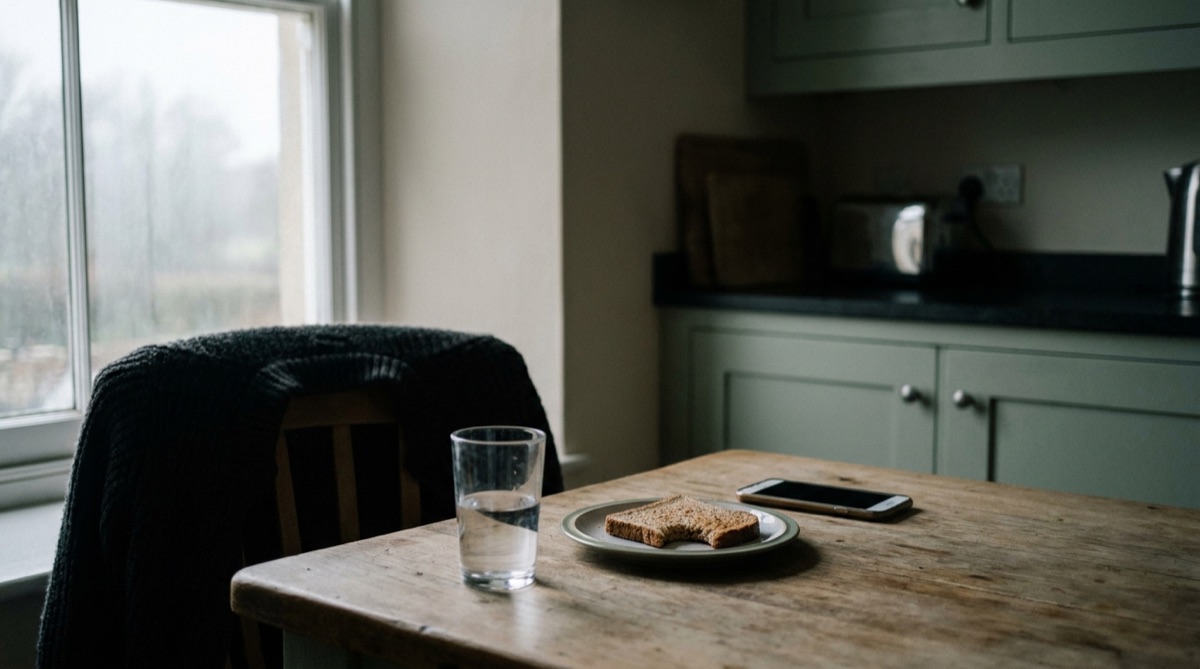
A barely touched slice of toast and a glass of water on a kitchen table in grey morning light
1

The quit almost always happens early

A large share of people who start a GLP-1 for weight loss are no longer taking it a year later, and much of that drop happens in the first weeks, before the medication has had a fair chance to do anything visible.

Now put that next to the trials. In the published semaglutide and tirzepatide studies, where the dose climbed on a fixed, slow schedule and people had clinical contact the whole way, only a small single-digit percentage stopped because of side effects.

Same molecule. Wildly different outcome. The difference is not the drug. It is everything wrapped around it.

~7%
Stopped for side effects in the trial setting
Slow fixed titration, clinical support, published discontinuation rates for the underlying molecules.
Most
Are off it within a year in the real world
Published pharmacy claims analyses of people starting a GLP-1 for weight loss. The two reasons that come up again and again: how it felt, and what it cost.

Both figures describe the underlying molecules as studied and dispensed generally. They are not RxPros patient outcomes, and individual experience varies.

2

The nausea is not a side effect of the drug working. It is the drug working

GLP-1 medication does three things at once. It acts on appetite signalling in the brain, it quiets what patients call food noise, and it slows down how fast your stomach empties. That third one is a large part of why you stay full on less food. It is also, precisely, why you feel queasy.

So the nausea is not the medication misfiring, or a bad batch, or your body rejecting it. It is the same mechanism you are paying for, felt from the inside. Which is why the answer is almost never to stop, and almost always to go slower and give the gut time to adapt. In most people it does adapt, and the queasiness fades over the following weeks even as the appetite effect stays.

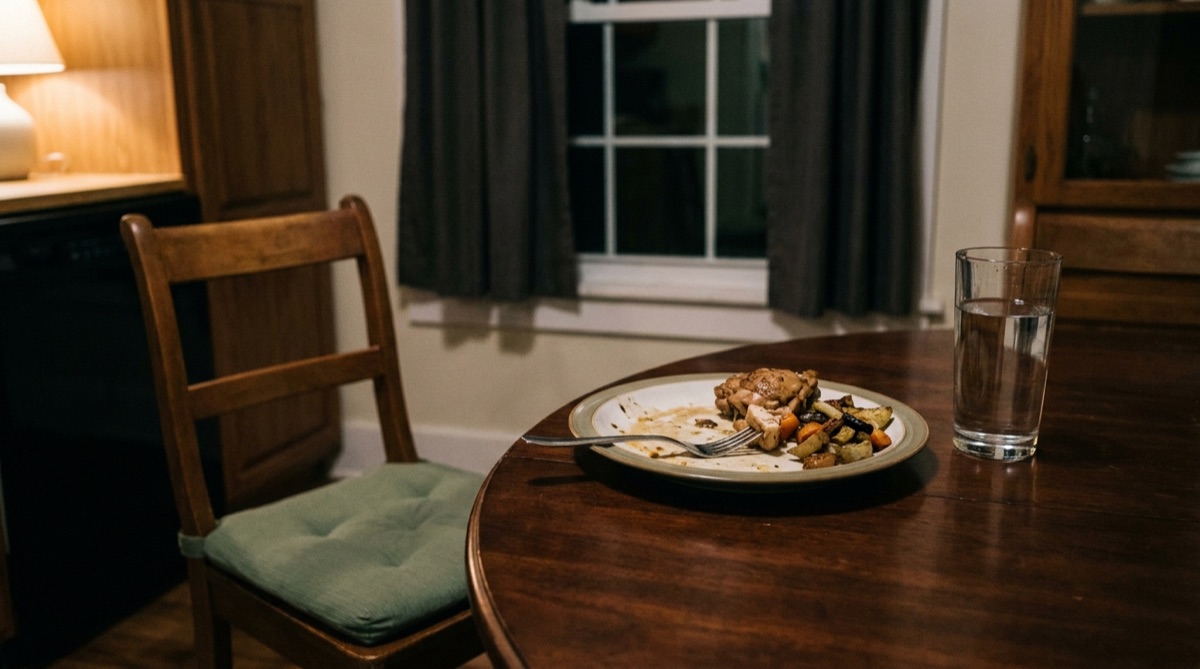
A half-eaten dinner pushed away on a kitchen table in the evening
The plate you could not finish, in the weeks before anything visible has changed.

In the semaglutide weight-loss trials, roughly four in ten participants reported nausea at some point. Most of it was mild to moderate, most of it clustered around dose increases, and most of it settled.

Reported as a headline, that sounds alarming. Understood as a schedule, it is something you can prepare for.

3

It has a schedule, and the schedule is the dose

Nausea on a GLP-1 is not random. It tracks the titration. It arrives in the days after you go up a dose, and it comes back every time you go up again. Between the steps, most people feel fine.

Which means the hard weeks are known in advance. They are the ones on this strip.

Week 1
Starting dose
Lowest dose on purpose. Some early queasiness, often mild.
Weeks 2 to 5
The first window
The most common point to quit. Appetite changes are obvious, the scale mostly is not.
Every step up
It returns, briefly
A few days after each increase, then it usually settles again.
Month 3 onward
Mostly quiet
For most people the gut has adapted. The appetite effect stays.

General pattern reported across GLP-1 dose-escalation schedules. Your provider sets your actual titration, and individual experience varies.

A blank week on a kitchen calendar beside a set of keys
The hard days are on the calendar before they happen. That is the part nobody tells you.
The cruel bit of timing. The worst stretch lands before the results do. You are three weeks in, feeling rough, and the scale has barely moved. That is the exact moment most people decide it is not worth it, and it is roughly one month before they would have decided the opposite.
See what is in the vial, and what it costsBoth medications, priced in full
4

Most programs hand you the molecule and leave the rest to you

Every program in this category knows the first eight weeks are where people are lost. Very few do anything about it in the product itself. You get the molecule, a titration schedule, and a wish of good luck.

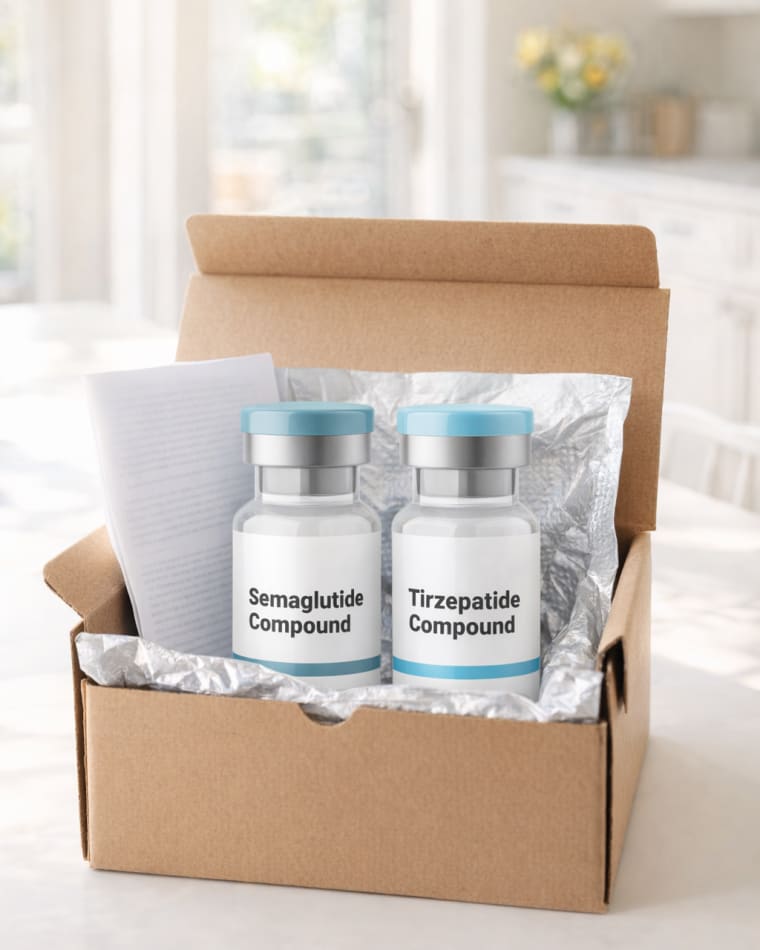
RxPros compounds three things into the vial alongside the medication, chosen for that stretch specifically.

Vials being prepared at a compounding pharmacy bench
Prepared to an individual prescription by a licensed US compounding pharmacy.
Vitamin B6in every vial
Nausea support

B6 is long established as a nausea remedy in other clinical settings. It is the standard first-line option in pregnancy, which is the most nausea-studied situation in medicine. It is included here for the same reason, at the point in treatment where nausea is most likely.

Vitamin B12in every vial
Energy & nerve function

When appetite drops this sharply, total nutrient intake drops with it. B12 supports energy and nerve function through exactly that stretch, and deficiency is common in people losing weight quickly.

Glycinein every vial
Tolerability

An amino acid included in the tirzepatide preparation to support overall tolerability during treatment.

Both medications arrive compounded this way, and it does not cost extra, because it is not an add-on. It is how the preparation is made. Zofran can also be added at checkout if you want a rescue option on hand for the harder days.

None of which makes side effects impossible, and anyone who tells you otherwise is selling you something. What it means is narrower: tolerability was designed into the formulation rather than left entirely to you.

See both plans, priced in fullSame formulation in both, at every dose
5

Six things that actually help

None of this is exotic. It is the practical layer most people work out by month three, which is a shame, because month one is when they needed it.

Pick your injection day deliberatelyThe roughest stretch tends to be the 24 to 48 hours after the shot. Put that on the days you can be quiet rather than the days you cannot.
Eat small and regular, before you feel like itAn empty stomach makes queasiness worse, and appetite is no longer a reliable prompt. Do not wait for hunger that is not coming.
Protein first, fat lastFatty, fried and rich food is the most reported trigger, because fat is already the slowest thing to leave the stomach and the medication has slowed it further.
Stop at "not hungry", not at "full"The fullness signal now arrives late. If you eat until you feel full, you have usually gone well past it, and that is where a bad evening comes from.
Fluids and fibre from week oneSteadily through the day rather than a litre in one go. Dehydration quietly makes both the nausea and the constipation worse, and constipation is far easier to prevent than to fix.
Do not chase the higher dose, and speak up earlyThere is no prize for reaching the top of the range. Holding where you are for a few more weeks, or stepping back down and re-climbing, is an ordinary clinical adjustment. It is not failure, and it is the fix for most of what makes people quit.
A small plate of simple home food beside water and tea
Smaller, earlier, protein first. Half the plate is the point, not a punishment.

One line of caution, and then we will stop. Severe stomach pain that will not settle, vomiting that stops you keeping fluids down, or yellowing of the skin or eyes are not the ordinary early-weeks queasiness. Those are reasons to contact your provider rather than wait it out.

What the first months actually look like

Including the weeks where the formulation matters most, and the month where the other kind of quitting starts.

Day 1
Free online visit, reviewed within hoursA few questions about your health and weight history, roughly two minutes. A licensed US provider decides whether this is right for you, as fast as 4 hours. Not everyone qualifies.
~3 days
Medication arrivesCold-packed, with the B6, B12 and glycine already compounded in. Weekly self-injection with a short needle.
Weeks 2 to 5
The window this page is aboutFood noise quiets before the scale moves, and this is where nausea is most likely. It is also where most people quit, and where the formulation is aimed.
Month 3
Your dose steps up. Your price does notThe first point where most programs raise your rate, and the first repeat of the nausea window.
68 to 72 weeks
The trial horizonThe published averages, about 14.9% and 20.9% body weight reduction, were measured over this long. Which is the whole argument for not quitting in week three.
A cold-packed shipping box
Shipped cold-packed, roughly three days after the visit.
6

The other reason people quit, and why it lands in the same week

Everything above is about how it feels. There is a second reason people stop, and the two are connected in a way worth seeing plainly.

GLP-1 dosing steps up over months. That is how it is designed to work. In most programs, every one of those steps also raises your rate, usually around month three and again around month six. So consider what happens to someone in a dose-priced program in the week their dose goes up. They feel the worst they have felt in a month, and they are charged more for it, in the same seven days. Results have not caught up yet. That is where the quiet quitting happens, and it is rarely the medication's fault.

We cannot make the titration painless. We can make sure it is not also the week your bill goes up.

Month 1
$199
starting dose
Month 3
$299
dose steps up
Month 6
$449
and again
Every month
$89.97
RxPros, any dose

Climb modeled on standard pricing that rises with your dose. Month six is where the climb peaks, and where a lot of people quietly quit.

The offer

So here is ours, priced in full.

The tolerability formulation is included in both, at every dose, and the price does not move when the dose does.

Most popular
Compounded semaglutide vial
Semaglutide
Compounded with B6, B12 & glycine
$89.97per month
Same price at every dose
  • B6, B12 and glycine compounded in for tolerability
  • 0.5mg to 2.5mg, flat rate across the whole range
  • Zofran available as an add-on at checkout
  • Online visit with a licensed US provider
  • Dose adjustments and provider messaging included
  • Cold-packed shipping, free
  • No membership fee, no insurance, no prior auth
  • Three-month plan (6 and 12-month terms available)
Start the free visit

Prescribed only if you qualify

Most effective
Compounded tirzepatide vial
Tirzepatide
Compounded with B6, B12 & glycine
$119.97per month
Same price at every dose
  • B6, B12 and glycine compounded in for tolerability
  • 2.5mg to 15mg, flat rate across the whole range
  • Zofran available as an add-on at checkout
  • Online visit with a licensed US provider
  • Dose adjustments and provider messaging included
  • Cold-packed shipping, free
  • No membership fee, no insurance, no prior auth
  • Three-month plan (6 and 12-month terms available)
Start the free visit

Prescribed only if you qualify

All 50 statesLicensed US pharmaciesDecision as fast as 4 hoursFree shipping

Against everything else

Not every GLP-1 program includes the same things. Here is the whole picture.

 
RxPros
Everyone else
Formulated for side effects
B6 + B12 + glycinein every vial
Molecule onlytypically
Anti-nausea option
Zofran at checkout
Your own doctor
Cost of holding your dose
$0price is flat anyway
No savingyou pay for the tier
Starting price
$89.97semaglutide
$199 to $400typical telehealth
Price at your highest dose
$89.97unchanged
$400 to $449climbs with dose
Brand-name route, no coverage
Not offered
$1,349/mopharmacy counter
Doctor visit and shipping
Includedcold-packed
Often extra
Insurance / prior auth
Neither
Usually both

Brand-name figure is published manufacturer list pricing. "Typical telehealth" reflects advertised rates across GLP-1 telehealth brands and the dose-based pricing structure most of them use. Twelve months at $89.97 is $1,079.64, against $16,188 at the brand-name counter.

What you are actually committing to

The part most programs bury. It is here, above the last button, on purpose.

Before you begin

  • The formulation supports tolerability. It does not remove side effects. B6, B12 and glycine are included with the hardest weeks in mind. Nausea, vomiting, diarrhea and constipation can still happen, and for some people this medication is not tolerable at all.
  • This is a three-month plan. Medication is dispensed three months at a time. Longer six- and twelve-month plans are also offered. Ending early carries a fee for the remainder of the term, so choose the term deliberately.
  • The visit is free. The medication is not. "Free online visit" means the evaluation costs nothing, not that anything is free after it. If a provider decides you do not qualify, you are not charged for medication.
  • Once a prescription is issued, the order is final. It goes straight to the pharmacy, and prescription medication cannot be returned once dispensed.
  • Compounded medication is not FDA-approved. It is prepared under Section 503A to an individual prescription and has not been through FDA review for safety, effectiveness, or manufacturing.
  • Not everyone qualifies. Eligibility is based on BMI and medical history and is decided by the provider, not by us and not by you.

Who this is not for

Questions people actually ask

How long does the nausea last?

For most people it is worst in the days after a dose increase and settles over the following weeks as the gut adapts. It then tends to return briefly at each step up, and to fade as the dose stabilises.

For a minority it does not settle, and that is a real conversation to have with your provider rather than something to endure quietly.

Does the B6 mean I will not feel sick?

No, and we will not claim that. B6, B12 and glycine are compounded in to support tolerability through the weeks where it is hardest. They are not a guarantee against side effects, and individual experience varies.

The honest version of the claim is this: most programs give you the molecule and nothing else. This one puts something in the vial aimed at the reason people quit.

What if I need to stay on a lower dose for longer?

Then you stay on it. Holding a dose, or stepping back down and climbing again more slowly, is an ordinary clinical adjustment.

It also costs you nothing here, because the price is the same at every dose. In a dose-priced program the incentive quietly runs the other way.

Can I get something for the nausea if it gets bad?

Zofran can be added at checkout, and your provider can be messaged about symptoms at any point during the plan. Most of what helps, though, is the unglamorous list further up this page: smaller meals, less fat, steady fluids, and not rushing the climb.

Is compounded semaglutide the same as the brand-name version?

It is the same molecule, prepared differently. A compounding pharmacy makes it to an individual prescription rather than it being mass-manufactured and sold as a branded pen. RxPros uses the pure base form of the molecule, not the cheaper salt form some sellers substitute.

It is not FDA-approved, and it has not been through FDA review for safety, effectiveness, or manufacturing. That is the honest trade-off behind the price difference, and it is why a licensed provider has to evaluate you first.

Do I pay more when my dose goes up?

No. The price at your lowest dose is the price at your highest: $89.97 for semaglutide, $119.97 for tirzepatide, for the entire plan.

Semaglutide or tirzepatide: which one?

Tirzepatide acts on two gut-hormone receptors instead of one and showed larger average reductions in trials, which is why it costs more. Semaglutide has the longer track record. Both are compounded with the same B6, B12 and glycine.

The provider reviewing your intake is the right person to make that call, based on your history rather than on price.

Start the free online visitTwo minutes · B6, B12 and glycine in every vial · one flat price
No insurance neededNo prior authorizationAll 50 statesFree shipping
RxPros works with licensed providers who evaluate patient eligibility for compounded GLP-1 medications. Compounded preparations are not FDA-approved and have not been evaluated by the FDA for safety, effectiveness, or manufacturing. Vitamin B6, B12 and glycine are included in the compounded preparations to support tolerability; they are not claimed to prevent, treat or cure side effects, and individual experience varies. Side-effect and discontinuation figures cited describe the underlying molecules as reported in published clinical trials and pharmacy claims analyses, not RxPros patients or compounded formulations. Weight-loss figures are averages from published trials of the underlying molecules (STEP-1, semaglutide, 68 weeks; SURMOUNT-1, tirzepatide, 72 weeks). Individual results vary. Nothing on this page is medical advice or a substitute for the judgement of your provider; do not start, stop or change a dose based on it. Product photography is illustrative. Prescriptions are issued only to patients who qualify, at the discretion of a licensed provider. This page is advertising for RxPros.